
India’s Small Business Market Paradox
Startups building for small businesses in India have immense opportunities but also greater responsibilities. Platforms must create value for the businesses and workers they depend on.
In this article, Bala Srinivasa looks at the platform paradox through the lens of ride-hailing drivers and the broader small business ecosystem in India:
“I tried booking an Uber to get to the airport earlier in the week. Twenty minutes and two driver cancellations later, I was still at it. It is very typical of ride-hailing drivers in India these days to call back asking if it is cash or online payment. My first two cabs had cancelled the trip as they did not fancy my destination and my mode of payment. The third driver asked me to cancel the Uber ride and pay him directly for the airport ride. By now, I was desperate to get to the airport and agreed to go off-platform.
While miffed, I decided to chat with my driver to understand his perspective. Over the past five years, Ola and Uber have controlled almost 80% of all cab rides in Bangalore. A driver outside these two platforms is not in the flow of consistent business. The driver pays a 30% cut for each ride to the platform, with some variation based on distance. This was acceptable initially, when the number of cabs was lower, and there were far more incentives as ride-hailing platforms tried to get to critical mass.
Today, this driver, who was making INR 70,000 a month, is down to a take-home of around INR 30,000 to INR 40,000 a month. Skyrocketing petrol prices and high platform fees have crushed earnings. Drivers now pick and choose destinations based on their own computations of cost to serve, Ola/Uber commissions, while finding commission-less private rides to maximise income. My cab driver took a bank loan for his car with steep monthly loan payments that are at risk of default as his monthly income deteriorates.
So, when he asks for a ride off-platform, he is trying to find a balance between the technology genie that brings business and, over time, makes it harder to earn and grow. This is the paradox that any start-up looking to target small businesses needs to think deeply about and solve. How do you ensure a win-win where both parties are allowed to scale and grow?
You may be thinking that cab drivers are not representative of small businesses. There are about 60 to 70 million SMBs, or Small and Medium Businesses, in India. These businesses account for almost 30% of GDP and are present in every major sector: retail, manufacturing, education, logistics, hospitality, and real estate, among others. While SMBs employ around 100 million people, it is a very long tail. Ninety-five per cent of SMBs in India employ fewer than five people, and 98% employ fewer than ten. The other way to look at it is that, of the 60 million small businesses, only 1 to 1.5 million small businesses in India have more than ten employees. For most small businesses, it is a battle for survival rather than scale and expansion.
This is what makes the Indian SMB market’s opportunities so complex. The market is large, but it is also fragmented, operationally stretched and highly sensitive to pricing, trust and cash flow.
According to a report by TeamLease RegTech, there are over 65,000 compliance requirements overall for small businesses across all states, of which 26,000 have imprisonment clauses. In the medium business category, companies with 150 employees need to adhere to 500 to 900 compliance requirements that cost INR 12 to 18 lakh a year. The broader point is that there is a huge amount of friction and difficulty in staying open as a small business.
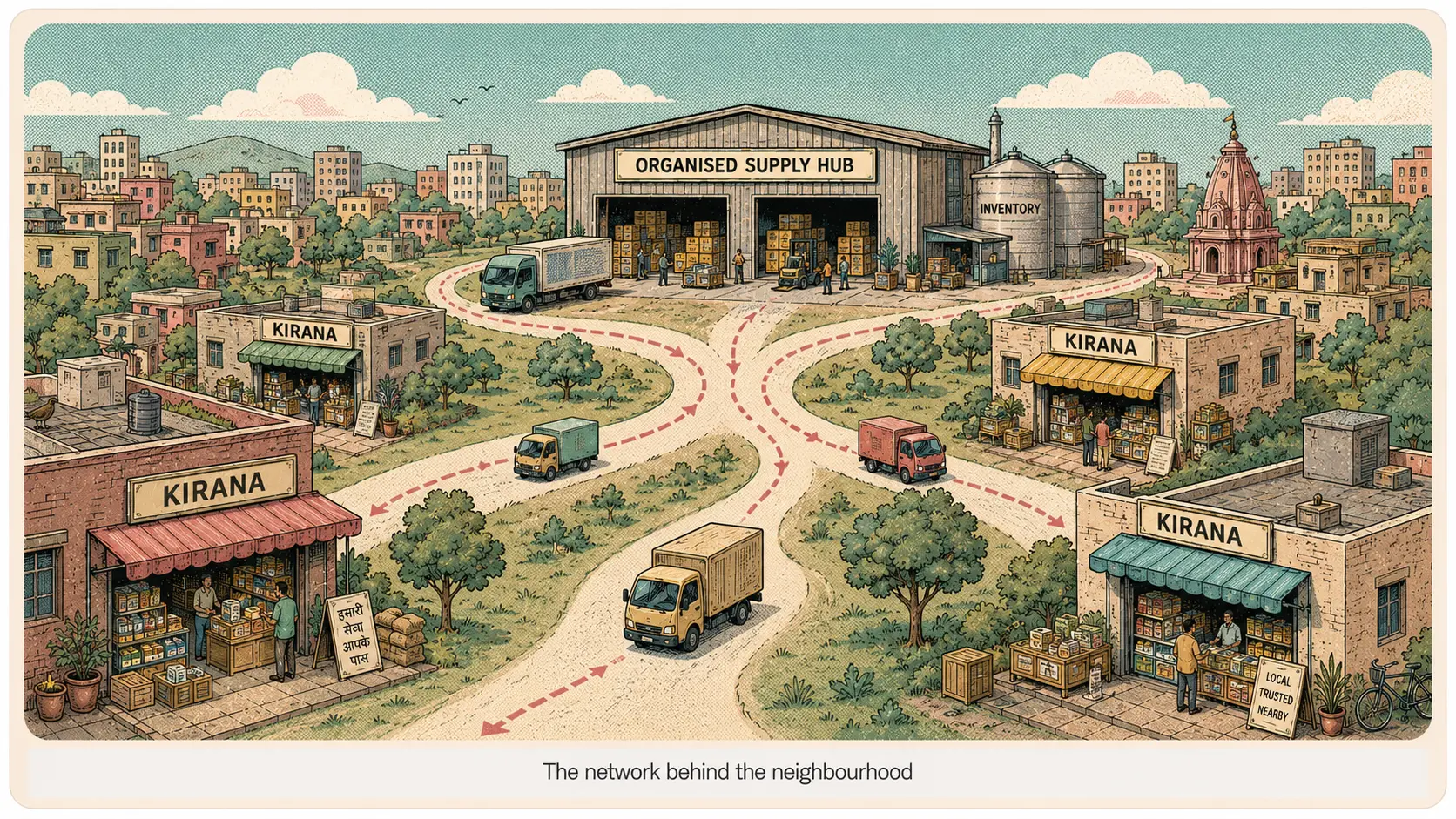
There are hundreds of tech start-ups attracted to the size of the small business market in India. There are marketplace and aggregator platforms for kirana stores, pharmacy owners, truck owners, small-scale manufacturing, textile makers and emerging areas such as content creators, homemakers and last-mile delivery professionals. This includes both the platform economy and the rising base of gig economy workers, where individual earners often behave like micro-entrepreneurs. In addition, over two hundred start-ups have set their sights on the SaaS route with easy-to-use solutions for receivables, invoicing, payments, taxation and HR, among others.
Over the years, we have learnt that unlocking this market takes real innovation in product as well as business models. While getting to scale with “almost free” products works as an acquisition strategy, there are serious challenges in building successful and profitable business models. Most importantly, it takes a real India-centric understanding of the customer and finding win-win solutions that enlarge the market itself.
The SMB ecosystem cannot be approached only through software distribution or low-cost acquisition. It requires a deeper understanding of market fragmentation, informal operating behaviour, thin margins, and the daily trade-offs that small business owners and earners make. This is also why the digitisation of such businesses must create visible economic value for the user, not just operational data for the platform.
Whether it is kirana digitisation, mobility platforms, logistics marketplaces or software tools for small merchants, the central question remains the same. Does the product increase the small business owner’s ability to earn, manage risk and grow sustainably?
Next week, I will outline some of the areas we see as crucial to succeeding as a provider to this market and what we are hearing from successful entrepreneurs.”
For Arkam, the core takeaway is that building for Indian small businesses required more than distribution, discounts or software adoption. It requires a deep understanding of slim margins, informal behaviour, trust, cash flow and the daily trade-offs that shape business decisions.
This is why the small business market in India remains a demanding but rewarding opportunity for founders who are willing to build with patience, empathy and executional depth.