Middle India will shape some of the largest consumer technology outcomes of the next decade. But, building for this market requires more than translating products designed for urban, English-first users.
In this piece, Rahul Chandra introduces Slingshot, our effort to bring together product managers and builders who want to understand Middle India more deeply. Through practitioner conversations, we hope to unpack the behaviours, constraints, and product choices that help companies build for India’s next 400 million users.
“Introducing Slingshot, a Group for Product Managers Focused on Building for Middle India”
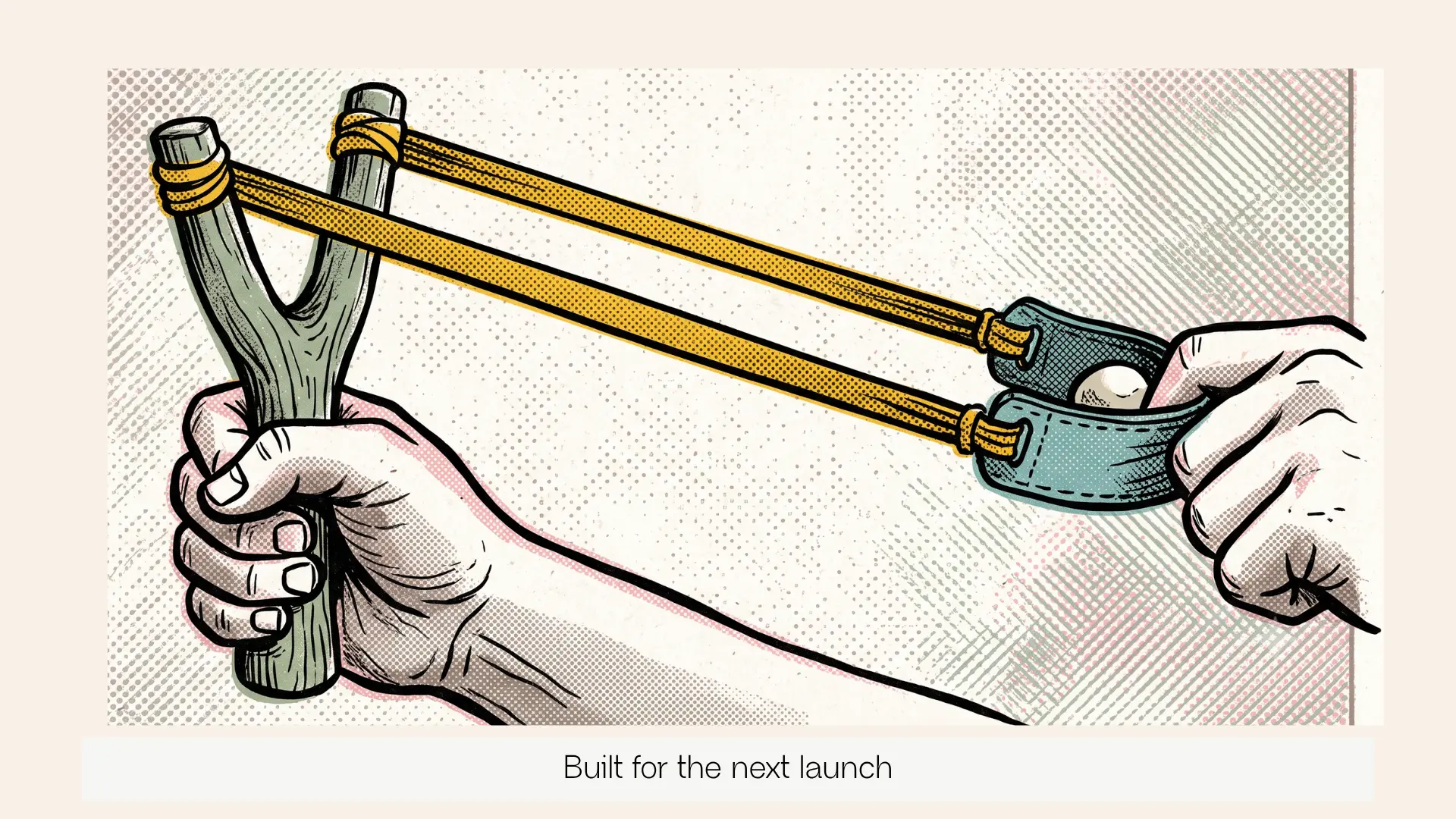
“With the right bearings, a spacecraft can come close to a planet orbiting around the Sun, effectively using more of the planet’s gravitational forces and less fuel to increase its own momentum, before it thrusts away at greater velocity to get to its desired destination, completing what has fondly come to be known as a gravitational Slingshot.”
We at Arkam believe that the time is ripe for India’s true digital awakening, with the next 400 million middle-of-the-pyramid Indians consuming services and transacting in a digitally native manner. This movement, spearheaded by rising smartphone and internet penetration, along with the creation and massive adoption of digital rails such as Aadhaar and UPI, has been further accelerated by the pandemic.
We believe that the biggest start-up outcomes of the next decade will come from Middle India. While this part of India holds a huge addressable market, it comes with its own distinct set of nuances and colours. The consumer in Middle India is significantly different from the top 10% of the pyramid. Their introduction to the digital world has been shaped by a different set of devices, platforms and content forms.
These differences translate to a remarkable gap between conventional product management approaches and those needed for middle India consumers. It is this gap in understanding, and its translation into product management best practices for Middle India, that the Slingshot interview series aims to bridge.
“With the right set of underlying principles and a deeper understanding of Middle India, products can solve real consumer problems and gracefully complete their Slingshot manoeuvre, amassing growth that is explosive, yet frugal.”
With this motivation, we are building a product management community for people who are curious about building for the Middle India market. This community will have access to curated content, office hours with globally renowned product managers and live sessions with thought leaders.
For product managers in India, this is an opportunity to learn from practitioners who have studied the country’s digital adoption from the ground up. If you are fascinated by, or are already building for Middle India, we urge you to join the group by subscribing and sharing your experiences and learnings with the community through comments.
We bring to you the first interview in the series, where we spoke to Prashant Singh, ex-co-founder, Shifu, and ex VP-Product, Paytm. As a result of the pandemic, Prashant was forced to cancel his trip to Bali and instead spend six months in his hometown, Bikaner.
Like a true product manager, his curiosity got the better of him. He poked and tinkered around, trying to understand how people in his hometown perceive and use digital products. His observations offer a useful lens into consumer behaviour and product strategy in India and the choices that shape successful mass market products.”
For anyone thinking seriously about product leadership in India, the lesson is clear. Building for the Indian consumer ecosystem requires more than adapting products built for urban, English-first users. It requires sharper user research, local context, and a willingness to design around the lived realities of a very different digital consumer.”
Middle India needs its own product playbook. The next generation of mass-market products will come from teams that invest in local context, sharper user research and a deeper understanding of how consumers actually discover, trust and use digital services.